
Laser Surgery for Pilonidal Sinus
A minimally invasive method with faster recovery and an excellent aesthetic result
Many people diagnosed with a pilonidal sinus wait too long, endure discomfort and recurring inflammation, while the solution can be considerably simpler than they think.
At Poliklinika Maletić, we treat the pilonidal sinus with a laser method: the procedure takes about 30 minutes under local anaesthesia, and a return to everyday activities is possible in 3 to 5 days.
DEFINITION
What is a pilonidal sinus and why does it occur?
A pilonidal sinus (pilonidal cyst) is a chronic inflammation of the skin in the tailbone (sacrococcygeal) region, the area between the buttocks, approximately 5 cm above the anus. The name comes from the Latin words pilus (hair) and nidus (nest), which describes the very essence of the problem: hairs that become trapped under the skin and cause inflammation.
The exact cause is not fully understood. It is thought that the disease develops due to a combination of friction, pressure and increased hairiness. The hairs in that area do not grow out through the skin but remain beneath it and act as a foreign body. The body reacts with an inflammatory response that can, over time, turn into a chronic problem.
Who is most commonly affected?
The disease occurs significantly more often in men; it is estimated that in up to 90% of cases the affected are men, especially those with pronounced hairiness. It typically appears between puberty and the age of forty.
This is a medical problem that we routinely see in our clinic; you do not need to feel uncomfortable talking about it.
Risk factors
- ✓ Male sex and increased hairiness
- ✓ Sedentary work (drivers, IT professionals, office workers, students)
- ✓ Excess body weight
- ✓ Poorer hygiene of that area
- ✓ Increased sweating and skin friction (tight clothing, intense exercise)
- ✓ Lack of physical activity
- ✓ Cyclists, motorcyclists and athletes with repetitive friction in the tailbone area
Laser Surgery for Pilonidal Sinus — pricing with no hidden costs
The price depends on the chosen method and the extent of the procedure. The amounts shown are final — with no additional costs you have not seen in advance.
Price notes
- Payment methods — Poliklinika Maletić accepts payment in cash, by credit card and by bank transfer.
- General anaesthesia — For procedures normally performed under local anaesthesia where the patient opts for general anaesthesia, the surcharge is 500,00 €. (reference price – 10 Sep 2026: 500,00 €)
The right method depends on your examination findings. Read more further down the page ↓
SYMPTOMS
How to recognise a pilonidal sinus - symptoms you should not ignore
Acute form
- A painful, tense swelling in the tailbone area
- Redness and warmth of the skin
- Difficulty sitting and walking
- Purulent or blood-tinged discharge
- Elevated temperature
Chronic form
- One or more small openings (fistulas) on the skin in the tailbone area
- Intermittent or persistent discharge of purulent or blood-tinged content
- Unpleasant odours
- Mild to moderate pain, especially when sitting or lying on the back
- Recurring inflammations that subside and then return
A pilonidal sinus does not go away on its own.
TREATMENT METHODS
How is a pilonidal sinus treated?
Treatment depends on the stage of the disease and whether it is a first episode or a recurring problem.
Acute phase (abscess)
When active, painful inflammation is present, the priority is drainage; the surgeon makes a small incision and empties the purulent content. At this stage, antibiotics alone are not sufficient and cannot replace drainage. After the inflammation subsides (usually 4 to 6 weeks), a permanent solution is undertaken.
Chronic phase - treatment options
There are several surgical approaches that differ in invasiveness, recovery time and the risk of recurrence:
Comparison of treatment methods for chronic pilonidal sinus:
| Method | Anaesthesia | Recovery | Scar | Recurrence |
|---|---|---|---|---|
| Classic excision (open wound) | general / local | 6–12 weeks | larger | low |
| Excision with suturing | general / local | 2–3 weeks | smaller | higher infection risk |
| Endoscopic ablation / laser method | local | do 4 weeks | minimal | low |
Terms: excision = surgical removal of the affected tissue; endoscopic ablation = destruction of tissue with laser energy through a small opening, without a large incision.
At Poliklinika Maletić we use the laser method (laser pilonidoplasty – surgical closure of the pilonidal sinus with laser energy) as the first-choice method for chronic pilonidal sinus because it combines high effectiveness with minimal invasiveness and fast recovery.
ABOUT US
Laser surgery for pilonidal sinus at Poliklinika Maletić
What does laser surgery for pilonidal sinus look like?
Laser surgery for pilonidal sinus is a minimally invasive procedure performed under local anaesthesia, without the need for a hospital stay. The procedure itself takes about 30 minutes.
The fistula opening in the skin is widened circularly to a diameter of just 5 mm. Through that opening, a thin laser fibre is introduced that precisely destroys the inflamed and necrotic tissue inside the sinus, while simultaneously disinfecting the area and promoting natural healing.
The sinus is rinsed and all necrotic content is removed, without large incisions, without sutures, without lengthy dressing changes. Antimicrobial action of the laser (the ability to destroy microorganisms in the treated area with heat) further reduces the risk of postoperative infection.
Advantages of laser surgery compared with the classic surgical approach
The antimicrobial action of the laser is just one of the advantages of this approach - finally there is a laser method without general anaesthesia and long sick leave:
The procedure is performed without general anaesthesia and its accompanying risks.
An exceptionally fast and effective procedure without a long time on the operating table.
An opening of only 5 mm in diameter is made, without any need for suturing.
Return to work and everyday activities in just 3 to 5 days.
After healing, an almost completely invisible mark remains on the skin.
Laser energy significantly reduces the risk of postoperative infection.
A proven lower rate of disease recurrence compared with some classic techniques.
You arrive and leave the same day, without hospital admission or an overnight stay.
Recovery after laser surgery for pilonidal sinus
Recovery is fast and comfortable. From the first postoperative day, showering with liquid soap is recommended, and the opening in the skin (up to 5 mm in diameter) is covered with a waterproof dressing. Analgesics are needed for only a few days, and complete healing is expected within 4 weeks.
What to do during recovery
- Showering is possible as early as 24 hours after the procedure — dry the area by patting, not rubbing
- Regularly clean the affected area with liquid soap
- Wear comfortable, light cotton underwear
- Eat enough fibre in your diet for easier digestion and to avoid straining
- Light walking is advisable and encourages recovery
What to avoid
- Avoid prolonged sitting for the first few days
- Avoid heavier physical exertion and straining for the first week
- Do not ride a bicycle for 6 to 8 weeks
- Do not swim until the wound has completely healed
- Avoid friction and sweating in the tailbone area during the first weeks
When can you return to work?
Office workers can return as early as 3 to 5 days later. For more physically demanding occupations we recommend a break of one week. The procedure does not require weeks or months of sick leave.
CHOOSING A SURGEON
What to look for when choosing a surgeon for pilonidal sinus surgery?
Choosing the right surgeon is crucial for a successful treatment outcome. This is a disease with proven high recurrence rates – according to studies, classic surgical methods record recurrence in 7 to as much as 30% of cases, so experience and technique directly affect the result.
Experience and specialisation
It is important that the procedure is performed by an experienced surgeon who will adapt the approach to your specific case – the extent of the disease, the number of fistula channels and previous treatments.
Availability of minimally invasive methods
Not all institutions offer the laser method. Ask whether laser pilonidoplasty is available as an alternative to the classic surgical approach – especially if fast recovery and a smaller mark on the skin are your priority.
Individualised approach
Every case of pilonidal sinus is different. The surgeon should perform a detailed clinical examination and discuss the options with you depending on the stage of the disease, your lifestyle and your priorities (e.g. a fast return to work vs. minimal risk of recurrence).
Continuity of follow-up
A good institution provides a follow-up examination and the availability of the team even after the procedure – in case of questions, complications or recurrence.
Transparency
No one can guarantee that the pilonidal sinus will not occur again. The surgeon should speak openly with you about possible recurrence, without making promises that cannot be kept.
The option of a consultation before the procedure
Before making a decision, you should have the opportunity to talk with the surgeon about all the options, risks and realistic expectations.
REVIEWS
What do our patients say?
Shared from our Google profile.
Top-notch clinic with an excellent expert like Dr. Ana Maletić. Friendly and professional staff, especially in Daruvar. The results of the service provided are extraordinary — a clinic that restores smiles and self-confidence.
After several different treatments done at this clinic I can say that I am very satisfied. Very friendly, professional team for whom I have only words of praise!
Thank you to everyone! I have never felt this good. From the front door, the nurse's smile, the doctors perfect, and in the operating room everyone like busy bees — diligent, without any noise. A recommendation for EVERYONE.
The best team of doctors, very professional and warm. I have been loyal to Poliklinika Maletić for more than 10 years and I am satisfied with the result every time. Thank you.
Excellent experience, all praise for the entire team. Expertise, dedication to the patient and a pleasant atmosphere that eases every fear I had. A big thank you to everyone.
Poliklinika Maletić deserves every recommendation — everyone is extremely kind, professional and dedicated to their patients. A very pleasant experience.
An extremely good and well-coordinated team of staff — Dr. Ana professional, the nurses kind and approachable. A pleasant, homely atmosphere. An absolute recommendation for everyone interested!
Top-notch service. The doctor and nurses extremely kind. Everything went perfectly. Definitely recommended.
All praise for this clinic! Booking is simple, appointments quickly available, and all the staff extremely approachable, kind and helpful.
Extremely kind, professional and approachable. A tidy and pleasant space. All praise for the people who work there.
An exceptionally skilled, pleasant and professional team that knows and loves its work. It is wonderful to be in the hands of some of the greatest experts.
Coming from UK, I had extremely positive experience here. Since my arrival I've felt immediately welcomed and cuddled, the team is amazing and the doctor outstanding! Absolutely recommend!
Everyone is kind, professional and caring.
DIFERENCIJATORI
Why choose Poliklinika Maletić for pilonidal sinus surgery?
Transparency about outcomes and recurrence is only part of the story. Here are six concrete reasons that make our clinic a serious choice for the laser approach to this surgery:
More than 30 years of experience in surgery and laser procedures
Our clinic is one of the longest-operating private surgical clinics in Croatia – continuously since 1998.
Laser education centre since 2008
Poliklinika Maletić operates as an educational laser centre (the Laser&Health Academy) – our surgeons not only apply the most modern laser technologies but also teach colleagues from all over the world. A centre that educates others must have an impeccable level of knowledge, experience and equipment.
State-of-the-art laser equipment
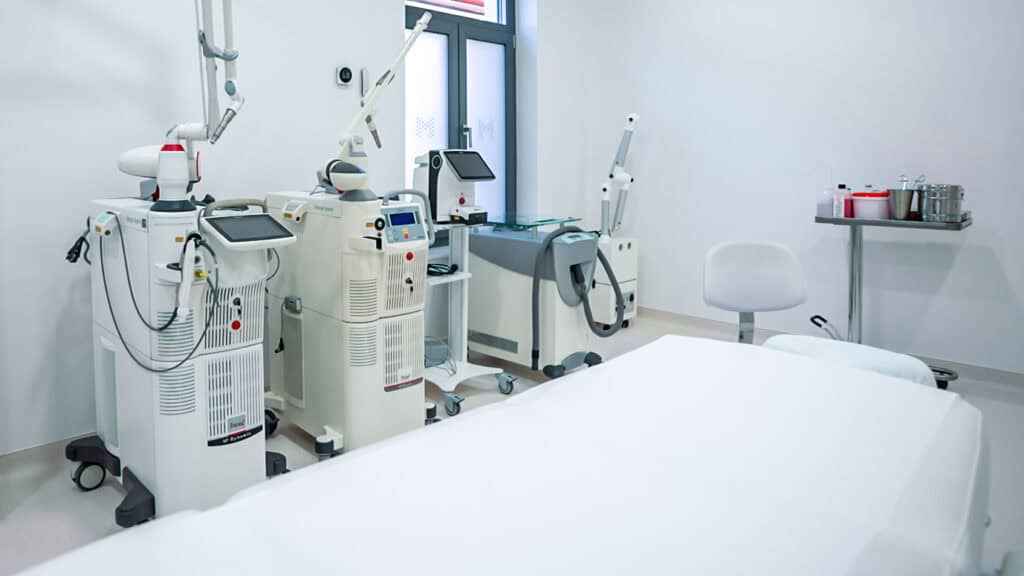
We use laser devices from Fotona that enable precise and effective treatment of the pilonidal sinus with minimal invasiveness.
Outpatient procedure, without a hospital stay
You arrive, the procedure is performed under local anaesthesia, and you go home the same day. No admission, no overnight stay.
An individualised approach and follow-up by the team
Every patient goes through a detailed examination and a conversation with the surgeon before the procedure. Our team is available for all questions and follow-up examinations after the surgery – we are here from the moment of decision until complete healing.
Top-quality operating-room equipment
The operating rooms are equipped for procedures under general and local anaesthesia, as well as with air recuperators that purify the air inside the operating room and reduce the possibility of postoperative complications.
QUESTIONS AND ANSWERS
Frequently asked questions about laser surgery for pilonidal sinus
Is the procedure painful?
The procedure is performed under local anaesthesia, so the procedure itself does not hurt. After the procedure, mild discomfort is possible, which is controlled with usual analgesics and passes within a few days.
Can I have a recurrence even after laser surgery?
Yes — recurrence is possible after any method of treating a pilonidal sinus. The laser method records lower recurrence rates compared with some classic techniques, but no one can guarantee that the pilonidal sinus will not occur again — neither our clinic nor any other. There is no method that 100% guarantees no recurrence. Prevention (hygiene, hair removal, body-weight control) and timely check-ups are key.
How can a pilonidal sinus be prevented from recurring?
Regular hygiene of that area, hair removal (epilation or laser hair removal), avoiding prolonged sitting and maintaining a healthy body weight reduce the risk of recurrence.
Is laser surgery suitable for everyone?
The laser method is the first-choice method for chronic pilonidal sinus without active severe inflammation. In the acute phase (an abscess), drainage and calming of the inflammation are needed first. At the examination, the surgeon will assess whether the laser method is a suitable approach for your specific case.
What is the price of laser surgery for pilonidal sinus?
You can find the price in our price list. The price depends on the complexity of the case (the number of fistula channels, previous procedures) — we also recommend an examination at which we will assess your specific case.
NEXT STEP
Solve the pilonidal sinus problem, without a lengthy recovery
A pilonidal sinus is not a problem that “goes away on its own”. The earlier treatment is started, the simpler the procedure, the faster the recovery and the lower the risk of complications. At Poliklinika Maletić, we offer a modern, minimally invasive approach that restores your quality of life in just a few days.
