
Gynecomastia surgery Zagreb - male breast reduction
Male breast reduction surgery - a discreet procedure, a natural male contour, a lasting result
Finally – a male breast reduction treatment with a clearly established diagnosis and realistically communicated expectations.
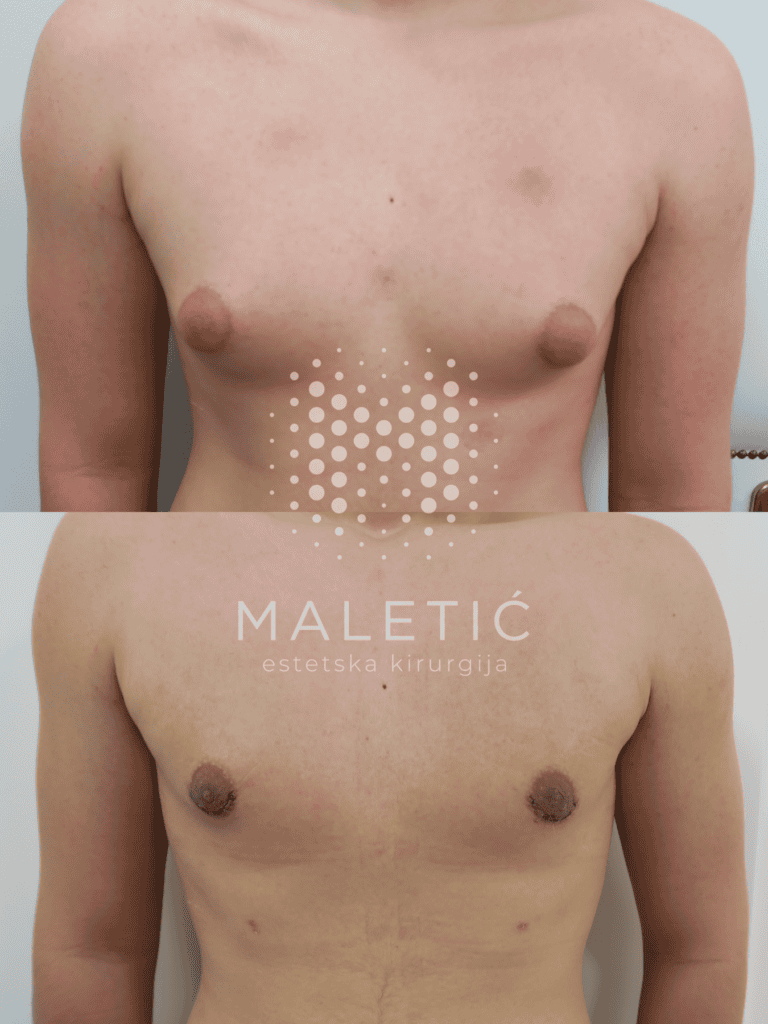
Everything is included in the price. Poliklinika Maletić plans every gynecomastia operation individually: after the examination we assess whether it is true gynecomastia or pseudogynecomastia and choose the optimal method – liposuction, gland excision or a combination, with the goal of a natural, symmetrical and masculine result.
Gynecomastia is a benign enlargement of the male breast caused by growth of glandular tissue, fatty tissue or a combination of the two. Although it is not life-threatening, it significantly affects self-confidence, everyday freedom of movement and quality of life – from avoiding changing rooms and the beach to discomfort in intimate relationships.
Gynecomastia surgery — pricing with no hidden costs
The price depends on the chosen method and the extent of the procedure. The amounts shown are final — with no additional costs you have not seen in advance.
Price notes
- Payment methods — Poliklinika Maletić accepts payment in cash, by credit card and by bank transfer.
- General anaesthesia — For procedures normally performed under local anaesthesia where the patient opts for general anaesthesia, the surcharge is 500,00 €. (reference price – 10 Sep 2026: 500,00 €)
The right method depends on your examination findings. Read more further down the page ↓
What is gynecomastia and why does it occur?
Understanding the causes - the first step towards a solution
Unlike obesity, in which the breasts are larger because of an increased amount of subcutaneous fat, true gynecomastia involves growth of the glandular breast tissue.
Even if "enlarged male breasts" look the same in a photograph, in practice they may require a completely different approach and a different surgical method. In some men fatty tissue predominates, while in others there is a genuine enlargement of the glandular breast tissue. An expert examination is crucial - what looks like "the same" can be a completely different condition.
True gynecomastia or pseudogynecomastia - how to tell them apart?
The difference between true gynecomastia and pseudogynecomastia determines the surgical method. True gynecomastia requires removal of the glandular tissue. Pseudogynecomastia can be resolved by liposuction alone.
True gynecomastia (glandular tissue)
True gynecomastia requires removal of the glandular tissue and is clearly distinguished from pseudogynecomastia.
- A firmer "rubbery" mass can often be felt behind the nipple
- It can be sensitive to touch, sometimes painful
- It does not always recede with weight loss or training
Pseudogynecomastia (lipogynecomastia - fatty tissue)
Pseudogynecomastia can be resolved by liposuction alone because fatty tissue predominates.
- Soft fatty tissue predominates in the chest area
- It occurs more often with excess weight
- It can partly improve with a change in lifestyle
Even if you think you know which type you have, in practice mixed forms are common - a combination of fatty and glandular tissue. In that case a combined procedure is the most precise solution.
The most common causes of gynecomastia
Physiological gynecomastia
Transient, due to maternal hormones.
Hormonal fluctuations, often transient (usually resolves within 6-24 months).
Falling testosterone + a higher proportion of fatty tissue (aromatase).
Medications and substances
However, some medications and substances can affect the hormonal balance and contribute to the development of gynecomastia. These include certain antiandrogens, some antidepressants, some heart medications, anabolic steroids, and the long-term use of alcohol and marijuana.
Diseases and conditions
Gynecomastia can be associated with diseases of the liver, kidneys and thyroid, with hypogonadism and, rarely, with tumours that affect the hormonal balance.
Diagnostics - the first step is an accurate assessment of the tissue
What does the examination include?
Medical history:
Duration, changes, medications, habits - a complete medical picture of your condition
Clinical examination and palpation:
A physical assessment of the tissue beneath the skin
Assessment of the proportion of fatty and glandular tissue:
Determining the right treatment method
Assessment of excess skin and nipple position:
Planning the surgical approach
If needed:
Breast ultrasound and laboratory/hormonal status - confirmation of the diagnosis
Surgical methods for correcting gynecomastia - which one is right for you?
The surgical method depends on the grade of gynecomastia according to the Simon classification — a standard medical scale that takes into account the amount of tissue and the presence of excess skin. Poliklinika Maletić assesses the grade at the first examination and chooses the optimal technique based on the findings.
| Grade | Clinical picture | Typical surgical method | Anaesthesia |
|---|---|---|---|
| I | Slight enlargement of glandular tissue, no excess skin. The chest is slightly protruding, the nipple is not displaced. | Liposuction Excision | Local |
| IIa | Moderate enlargement with no excess skin. Protrusion above the plane of the chest, the skin is elastic. | Gland excision + Liposuction | Local or general |
| IIb | Moderate enlargement with minor excess skin. The skin begins to lose elasticity, mild ptosis. | Combined procedure | Local or general |
| III | Pronounced enlargement with excess skin and ptosis. The nipple may be lowered below the inframammary line. | Combined procedure + Skin reduction | General anaesthesia |
Classification according to: Simon BE, Hoffman S, Kahn S. Classification and surgical correction of gynecomastia. Plast Reconstr Surg. 1973.
1. Liposuction
When fatty tissue / pseudogynecomastia predominates
2. Excision of glandular tissue
True gynecomastia3. Combined procedure
The most common scenario4. Procedures with skin reduction
For pronounced excess skinWhat does the gynecomastia surgery protocol at Poliklinika Maletić look like?
A transparent process from examination to recovery.
1. Examination and planning
Poliklinika Maletić assesses the type of gynecomastia, the symmetry and the skin quality at the first examination. We define realistic expectations and propose the optimal method.
2. Preoperative work-up
Before the procedure, standard tests are required according to the agreement and the anaesthesia protocol, together with an assessment of general health.
3. Surgery
The procedure is performed under local or general anaesthesia (depending on the extent) and is not painful. It usually lasts about 1-2 hours. The goal is to remove the excess tissue and shape a natural male contour.
4. Postoperative period
A compression garment is worn for 3-4 weeks after the procedure under ordinary clothing. Office work is possible again after just 2-3 days. More strenuous physical activity and demanding work with the arms should be avoided for about 2 weeks after the procedure. We close the wounds with self-dissolving sutures.
Recovery after gynecomastia surgery - what to expect?
The first few days
Swelling, tightness and mild soreness are expected
2-3 days
A return to office work is possible
About ten days
Bruising may be visible
2 weeks
Avoiding heavier physical exertion
3-4 weeks
Wearing the compression garment
2-4 months
Assessment of the final result
Risks and possible complications of gynecomastia surgery
Bleeding, haematoma or seroma
Infection
Temporarily reduced nipple sensation
Contour irregularities (dents/unevenness)
Asymmetry (sometimes pre-existing before the procedure)
Visibility of scars (individual)
Other complications related to local or general anaesthesia and to surgical procedures
At the examination we explain in detail what is realistic to expect in your case — without hiding the risks.
Why do patients choose Poliklinika Maletić for gynecomastia correction?
Many years of experience in gynecomastia surgery
Dr Ana Maletić, a specialist in plastic, reconstructive and aesthetic surgery, has been performing gynecomastia operations since 1998 — with more than 25 years of experience in surgically shaping the male chest contour. Dr Maletić plans every procedure individually: by liposuction, excision of glandular tissue or a combination, depending on the precise diagnosis of the tissue.
Individual assessment and method selection based on the findings
An operating theatre equipped to the highest international standards
A discreet surgical approach
An expert article on gynecomastia published in Lider magazine
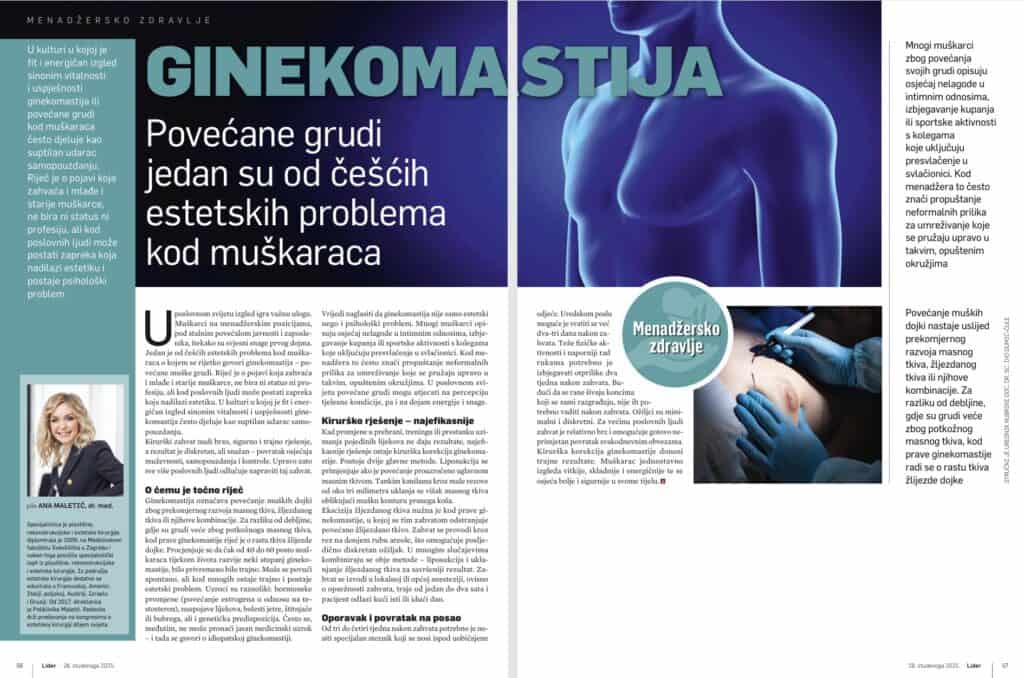
Surgical correction of gynecomastia delivers a discreet but powerful result — a return of the sense of masculinity, self-confidence and control.
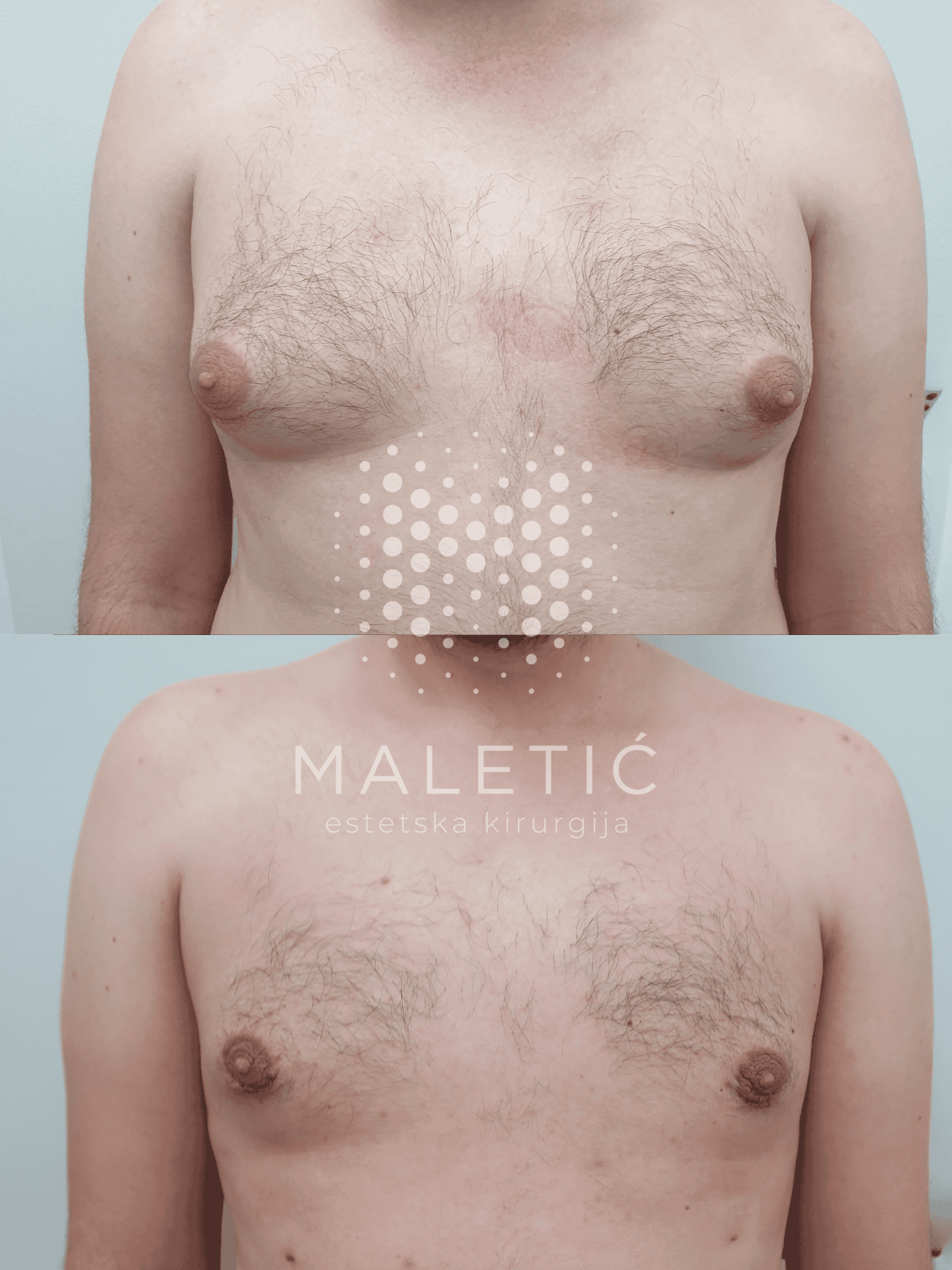
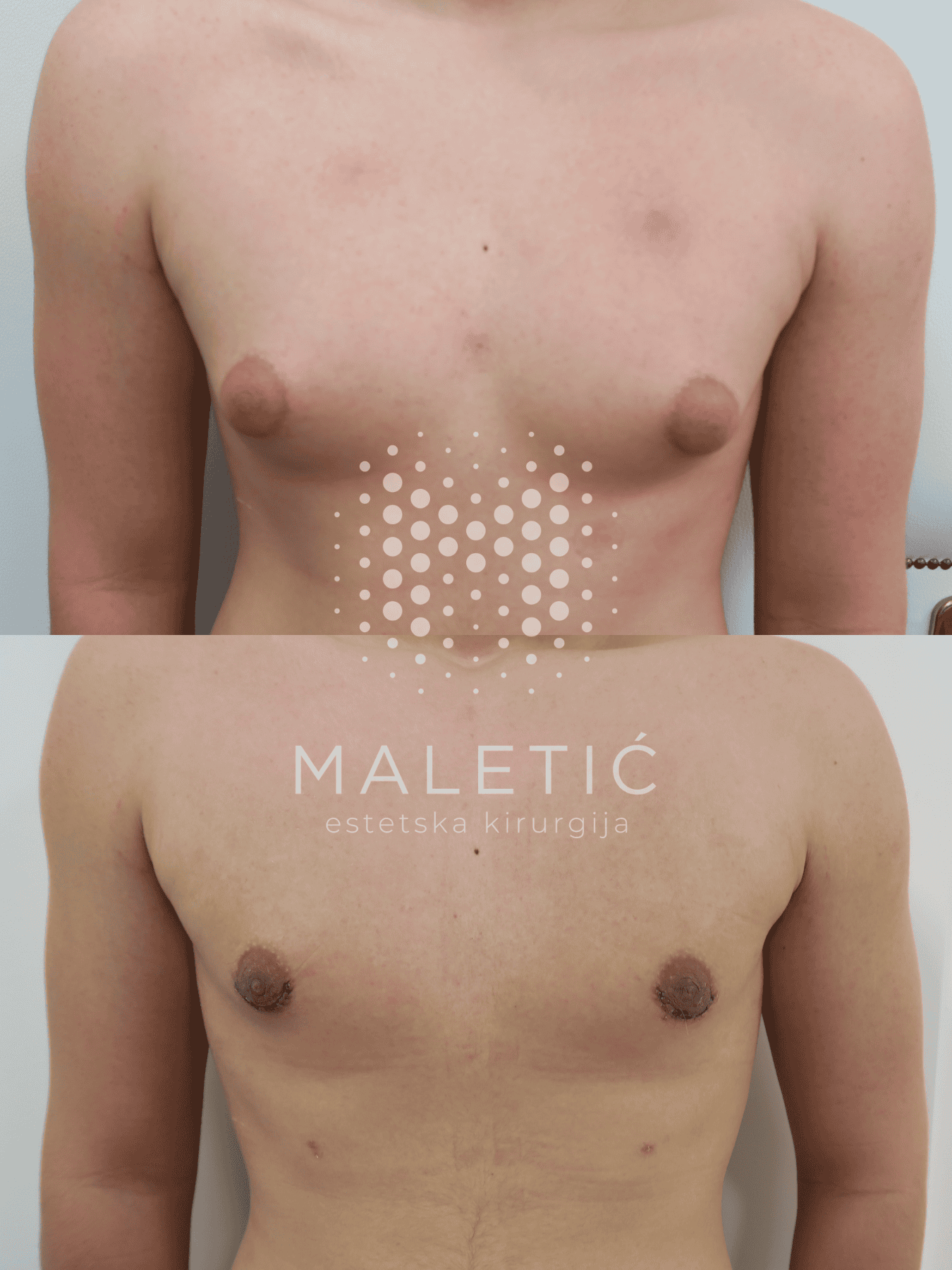
Results of gynecomastia surgery at Poliklinika Maletić
Below you can see examples of our patients’ results
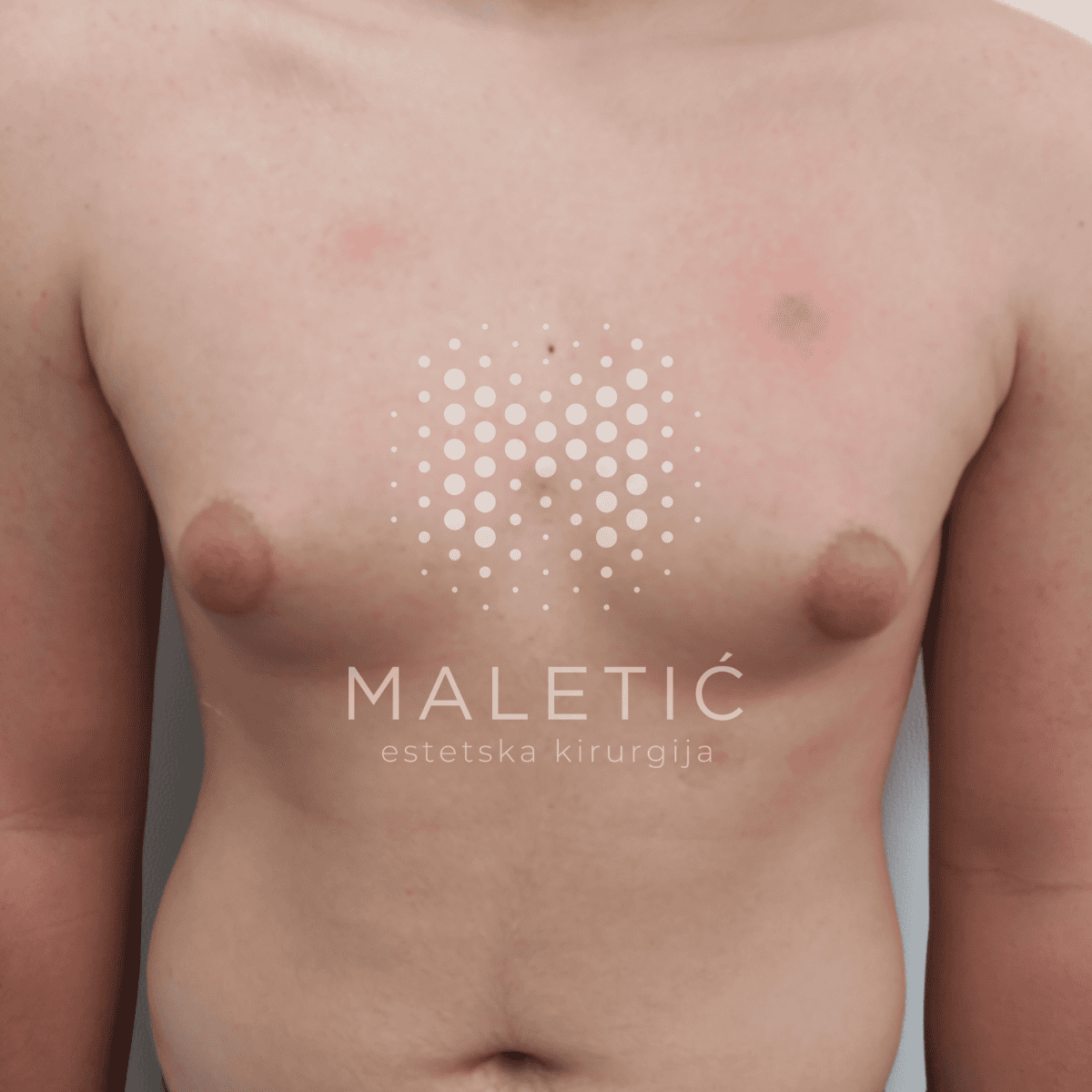
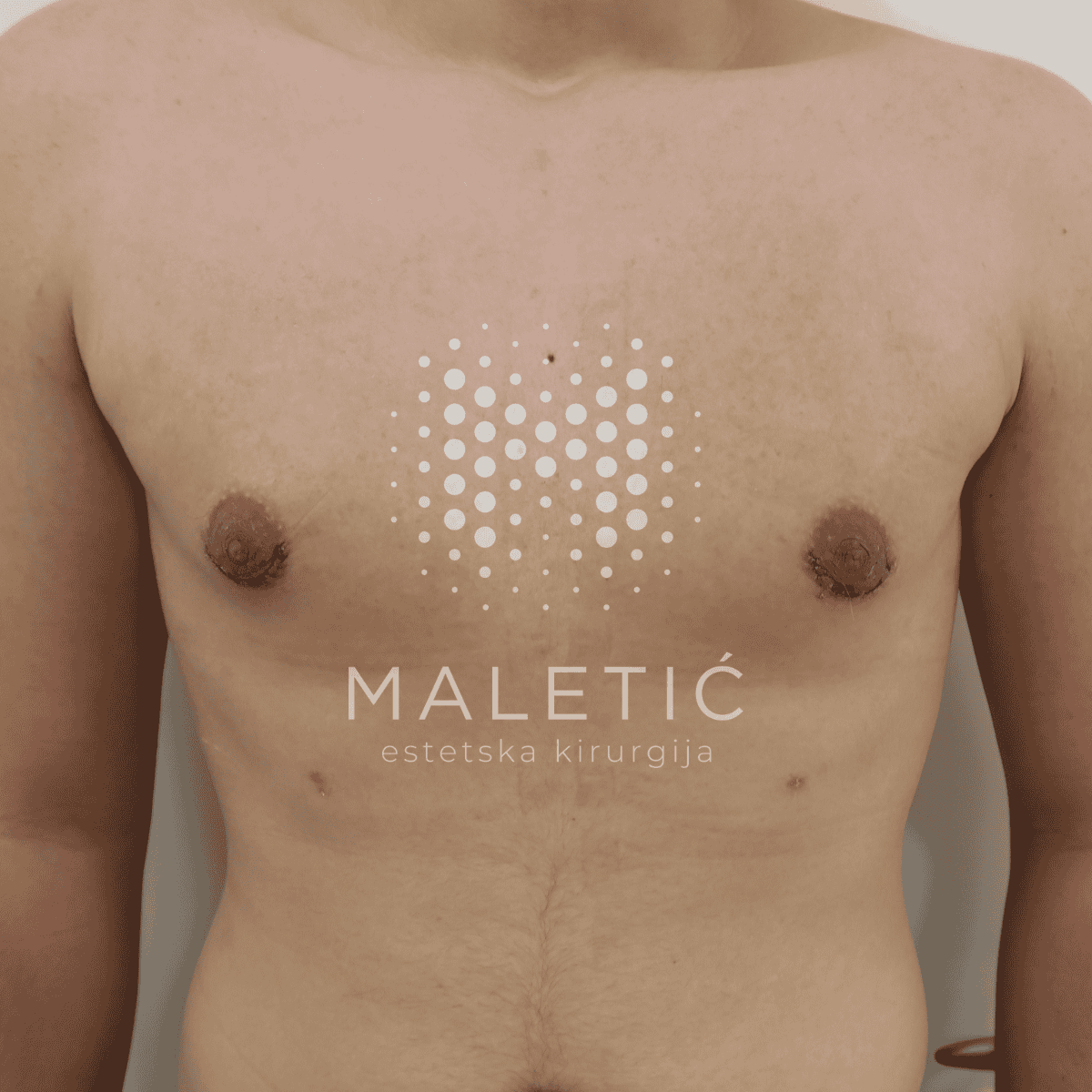
Additional results of our patients
Frequently asked questions about gynecomastia (FAQ)
Answers to the questions that patients most often ask before deciding on gynecomastia surgery at Poliklinika Maletić.
Will gynecomastia come back after surgery?
In most cases the results are permanent, especially when the glandular tissue that causes the true form of gynecomastia is removed.
If the cause is related to medications, hormonal changes or weight gain, it is important to address the cause as well and maintain a stable body weight.
Can gynecomastia be resolved with training?
If fatty tissue predominates, lifestyle changes can help the appearance, but very often fat is lost in other regions first and only later in the areas where men tend to accumulate fat, such as the breasts.
If there is enlarged glandular tissue, training cannot remove the gland — in that case surgical correction is the only permanent solution.
Can gynecomastia disappear on its own without surgery?
In puberty — yes, in adulthood — rarely. Pubertal gynecomastia resolves spontaneously in 40–60% of cases within 6 to 24 months, as hormone levels stabilise. If it does not resolve by the age of 18-19, surgical correction becomes the only permanent solution because the glandular tissue then becomes fibrotic.
True gynecomastia with enlarged glandular tissue does not respond to exercise or weight loss — it is the only type of tissue in the body that requires surgical excision.
Is gynecomastia surgery painful?
The procedure is performed under local or general anaesthesia and is not painful.
If it is performed under local anaesthesia, the injection of the local anaesthetic is felt, but once the local anaesthetic takes effect the procedure is not painful.
How long does gynecomastia surgery take?
Usually about 1-2 hours, depending on the method (liposuction, excision or a combination).
Under which anaesthesia is gynecomastia surgery performed?
The procedure can be performed under local or general anaesthesia, depending on the extent of the procedure and the assessment.
What is the difference between unilateral and bilateral gynecomastia?
Bilateral gynecomastia affects both breasts and is far more common. A certain degree of asymmetry between the two sides is a normal variation.
Unilateral gynecomastia affects only one breast and requires ruling out a malignant cause — we recommend a breast ultrasound as part of the preoperative work-up.
When can I return to work after gynecomastia surgery?
For office work within 2-3 days, while heavier physical activity is postponed for about 2 weeks.
How long is the compression garment worn after gynecomastia surgery?
A compression garment is worn for 3-4 weeks after the procedure under ordinary clothing.
What are the grades of gynecomastia and what determines the surgical method?
Gynecomastia is graded according to the Simon classification (Grade I to III), which takes into account the amount of excess tissue and the presence of excess skin:
- Grade I — slight enlargement with no excess skin, liposuction or excision, local anaesthesia
- Grade IIa — moderate enlargement with no excess skin, excision and liposuction
- Grade IIb — moderate enlargement with minor excess skin, combined procedure
- Grade III — pronounced enlargement with excess skin and ptosis, combined procedure with skin reduction, general anaesthesia
The grade is assessed by the surgeon at the first examination. A photograph can indicate the grade, but does not replace the clinical examination that distinguishes fatty from glandular tissue.
Criteria for choosing a clinic for gynecomastia surgery
If you are considering gynecomastia surgery, it is important to pay attention to several key factors when choosing a clinic.
Is a detailed tissue assessment performed (fatty vs glandular)?
Who performs the procedure?
Does the clinic present realistic expectations and transparent risks?
Is there a clear recovery and follow-up protocol?
Is the facility equipped for procedures under local and general anaesthesia, and does it use vibrating probes and a laser?
Poliklinika Maletić meets all the criteria:
Before the procedure we carry out a detailed assessment of the ratio of fatty to glandular tissue in order to select the correct method – liposuction, excision or a combination of the two. The operation is performed by a specialist in plastic, reconstructive and aesthetic surgery experienced in shaping the male chest contour. We clearly communicate realistic expectations, possible risks and the course of recovery to patients. Procedures are performed in an operating theatre equipped for local and general anaesthesia, with precise surgical technique and a structured protocol of postoperative check-ups. Safety, an individual approach and medical expertise are the foundation of every procedure at Poliklinika Maletić.
